Before you start
You need a Webflow site with a Form Block and an external form created in Reevo. Follow Connecting an External Form to Reevo to create it and copy its webhook URL.Add the webhook URL in Webflow
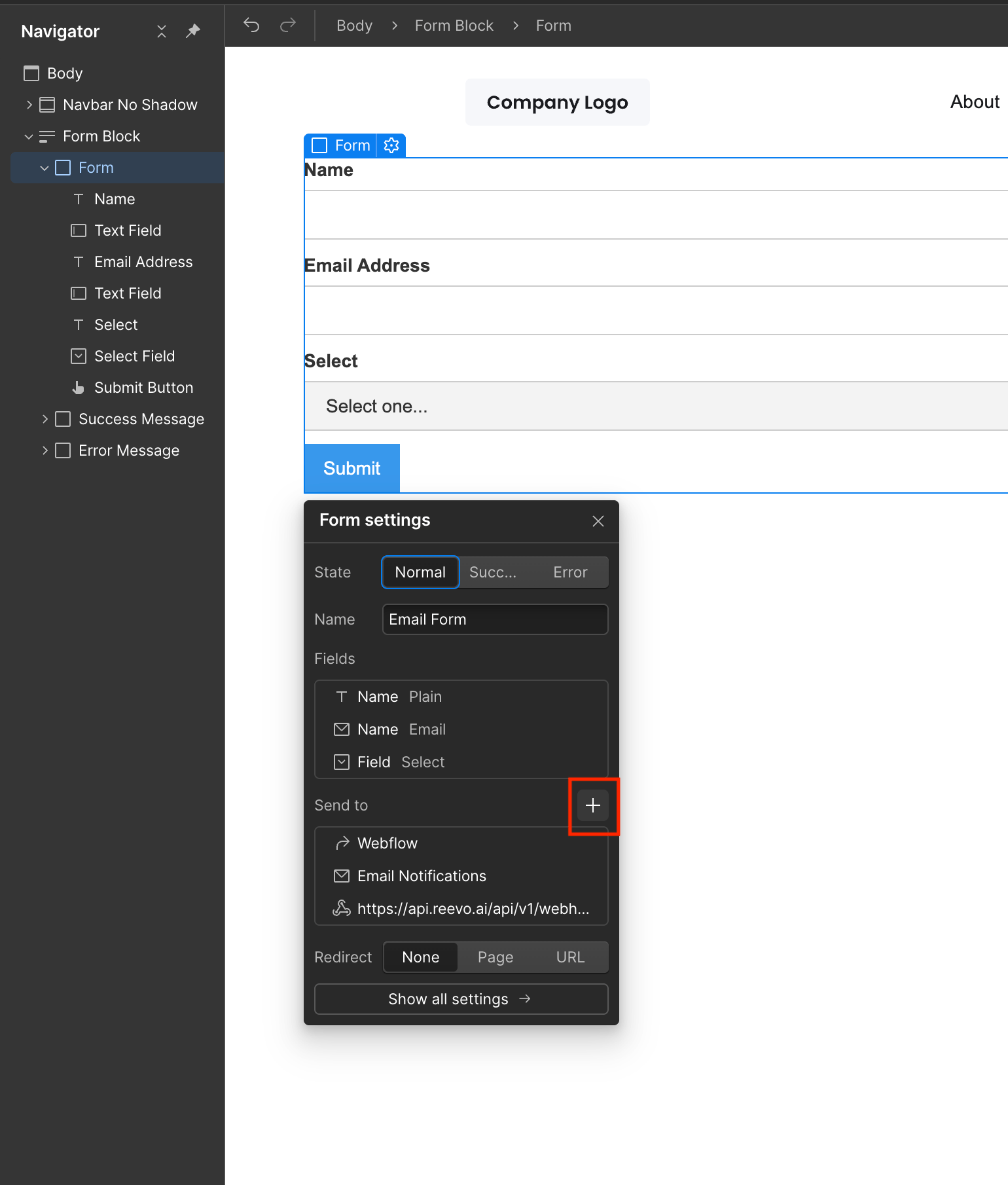
- Open your site in Webflow and select the Form Block on the canvas or in the Navigator.
- Open the Settings panel.
- Next to Send to, click the add icon and select Webhook.
- Paste the webhook URL you copied from Reevo.
- Save the webhook configuration.
- Publish your site so the webhook is active on the live form.
Identify the fields to map
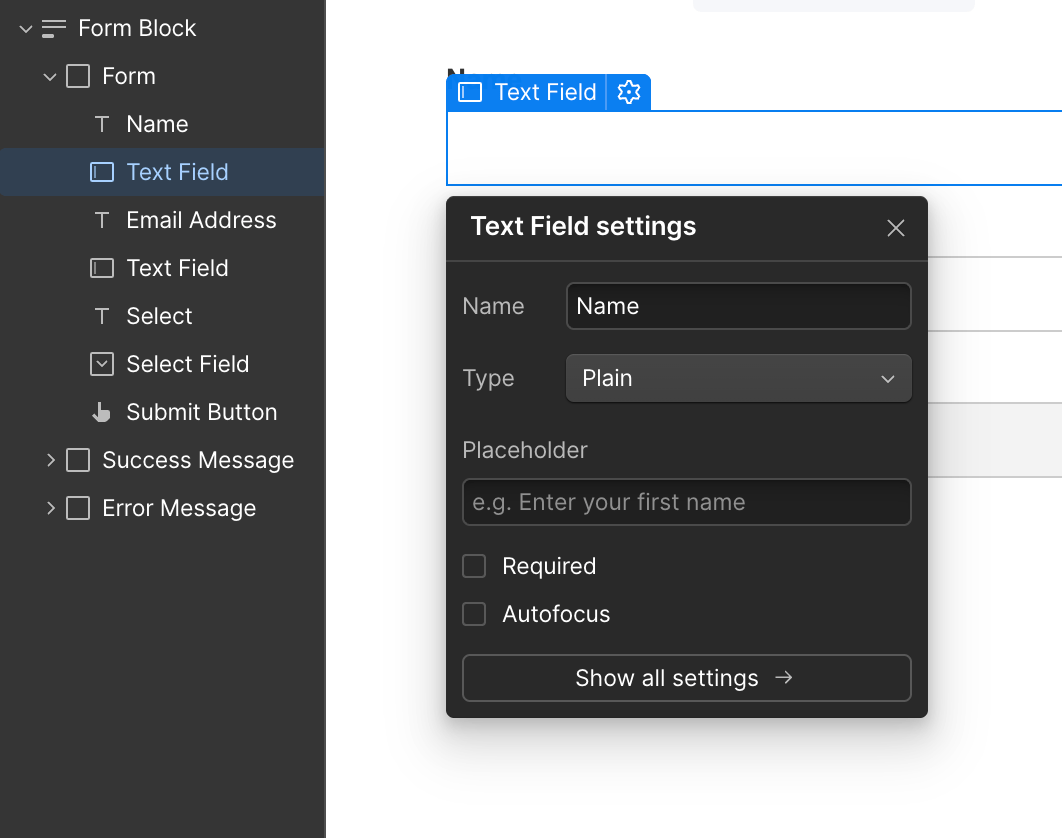
Webflow sends each input’s Name as its payload key. The visible field label can be different, so check the input itself rather than the text shown above it.- Select an input inside the Form Block.
- Open the input’s Settings panel.
- Find its Name and make sure it is clear and unique.
- Repeat for every field that you want to map in Reevo.
Map and test the form in Reevo
- Submit the published Webflow form using recognizable test values.
- Return to the external form builder in Reevo and click Populate from submission.
- Select the test submission.
- Map each Webflow field name to its Contact or Account field.
- Configure the connected workflow, then click Launch.
- Submit the Webflow form again and confirm the submission and workflow appear in Reevo.
For the complete mapping and workflow steps, see Connecting an External Form to Reevo.
Troubleshooting Webflow
- The webhook does not run: confirm that you saved the webhook and published the site after adding it.
- A field is missing: confirm that the input has a unique Name, then send another test submission.
- The form works in the designer but not on the site: test the published site rather than the Webflow designer preview.